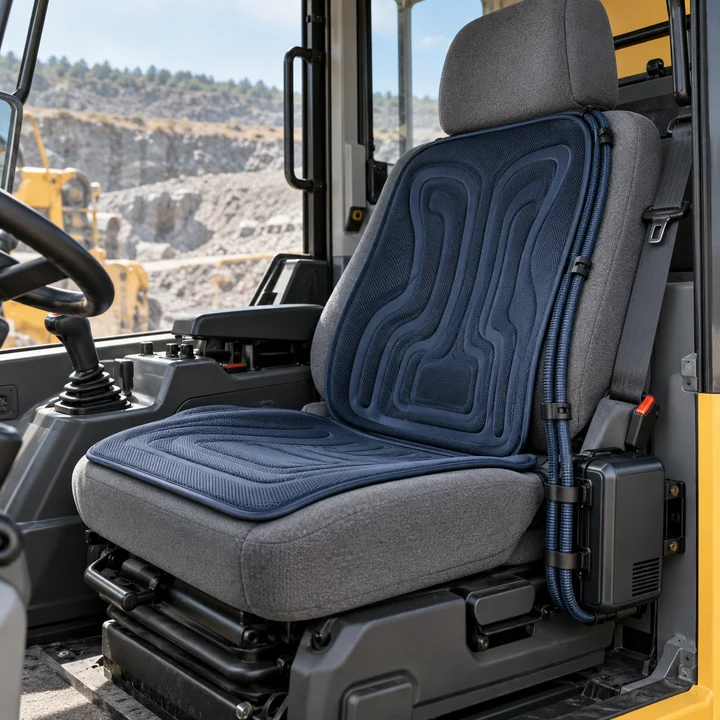
This concept adds a liquid-cooled cushion to the seat and backrest in a truck or equipment cab. The available space, seat movement, and cab power determine where the unit can mount and how the lines can run.
Equipment cab concept showing one possible unit location
Where cab seat cooling can help
A long shift in a delivery or freight truck
What the driver runs into
During a long stretch at the wheel, the areas against the seat base and backrest can feel warm even when air is moving through the cab.
What the concept adds
A liquid circuit draws heat from the parts of the cushion in contact with the driver. For a fleet trial, check available current at the cab socket and fit across the seat models in use. A 24 V setup needs its own evaluation.
A moving seat in an equipment cab
What complicates the fit
After hours in a warm cab, an operator may want a cooler seat surface. On a loader or similar machine, the seat can move on its tracks and its suspension can travel over uneven ground.
What to design around
A separate unit can circulate cooled liquid through the cushion from a mount away from the moving seat. Check that both hoses stay clear of the tracks and have enough slack throughout the seat’s travel.
Measure the seat surfaces and check room around the belt buckle, controls, and armrests with the cushion in place.
Seat movement
Check the available space for the unit and cable throughout the seat’s adjustment and suspension travel.
Cab power
Share the voltage and available current. A 24 V configuration needs to be evaluated for the vehicle.
How liquid cooling works
Liquid flows through channels inside the cushion and takes up heat from the seat surface. It then returns to the cooling unit. If the design uses a separate unit, the supply and return hoses need a route that stays clear of the seat tracks.